Operating Manual
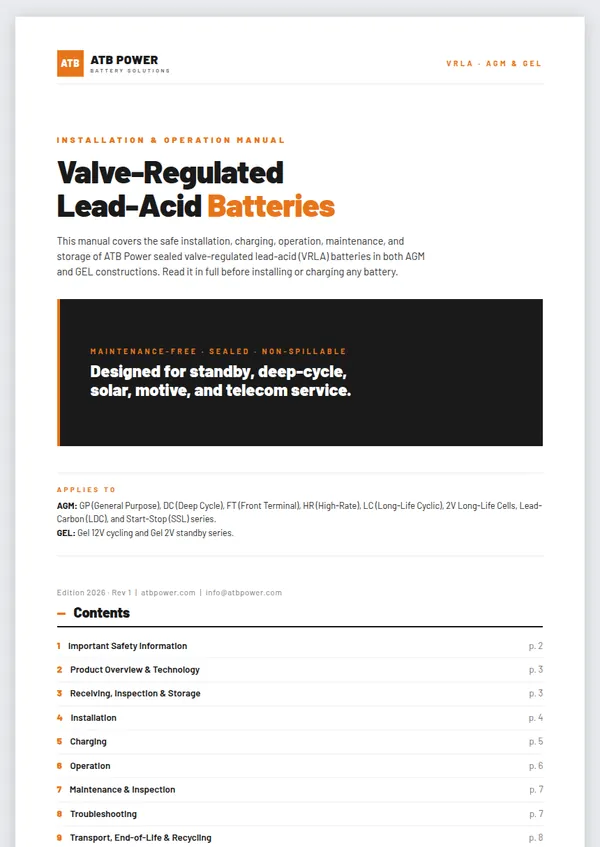
VRLA AGM & GEL Batteries
Installation, charging (AGM and GEL profiles), operation, maintenance, storage and safe handling for sealed lead-acid batteries.
Operating manuals, safety data sheets and product brochures for the ATB range. All files are PDF. For full datasheets, custom configurations, or documents not listed here, contact us.
No documents match that search. Try a shorter word such as “EU”, “SDS”, “brochure” or a series name (GP, DC, FT, HR, LC, 2V, SSL, Gel), or email info@atbpower.com.
General installation, charging, operation, maintenance and storage guidance by chemistry. Model-specific values on the product label or datasheet take precedence.
Installation, charging (AGM and GEL profiles), operation, maintenance, storage and safe handling for sealed lead-acid batteries.
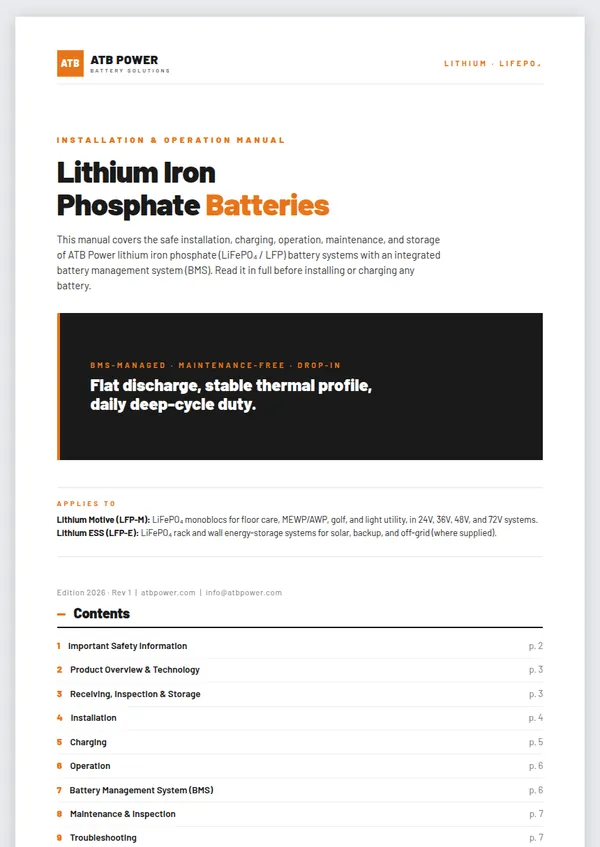
Installation, BMS behaviour, charging, operation, maintenance and storage for ATB lithium iron phosphate battery systems.
Safety data sheets prepared to the GHS 16-section format (29 CFR 1910.1200). Required for handling, storage, transport and disposal.
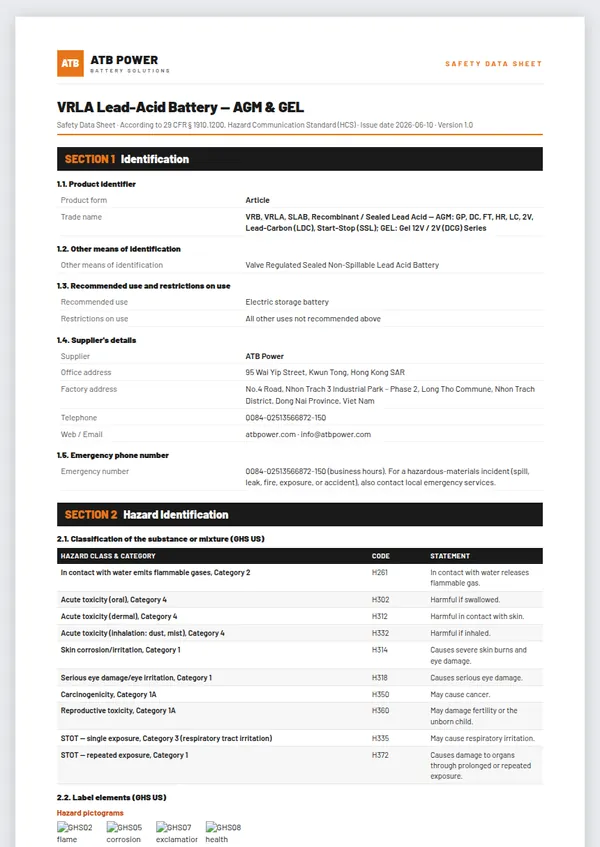
GHS safety data sheet for sealed lead-acid (VRLA) batteries, covering composition, hazards, handling, transport (UN2800, non-spillable) and disposal.
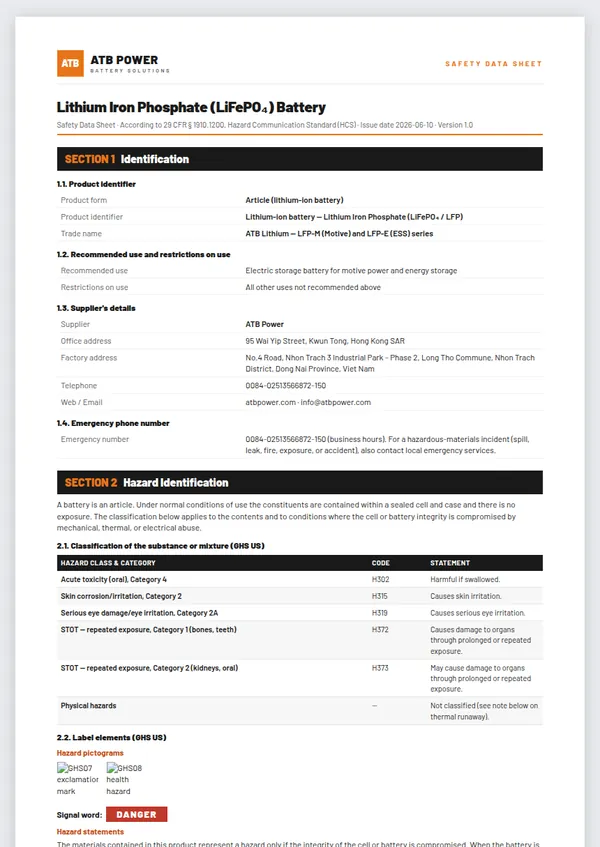
GHS safety data sheet for ATB lithium iron phosphate battery systems, covering composition, hazards, handling and Class 9 (UN3480 / UN3481) transport information.
Need an SDS for a specific market or language, or in a customer template? Email info@atbpower.com.
Declarations and information issued by ATB Power as manufacturer under Regulation (EU) 2023/1542 concerning batteries and waste batteries, covering the ATB valve-regulated lead-acid ranges (AGM and GEL). The QR code marked on ATB batteries (Article 13(6)) opens the compliance page below, which carries the EU declaration of conformity, the label information and the end-of-life information.
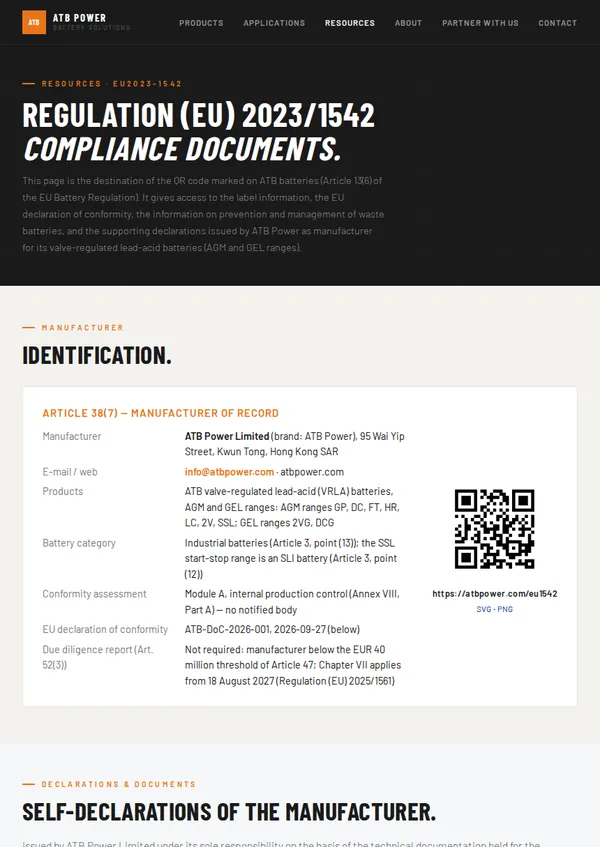
The page linked by the QR code on ATB batteries: manufacturer identification, all declarations, label information and end-of-life information for the AGM and GEL ranges.
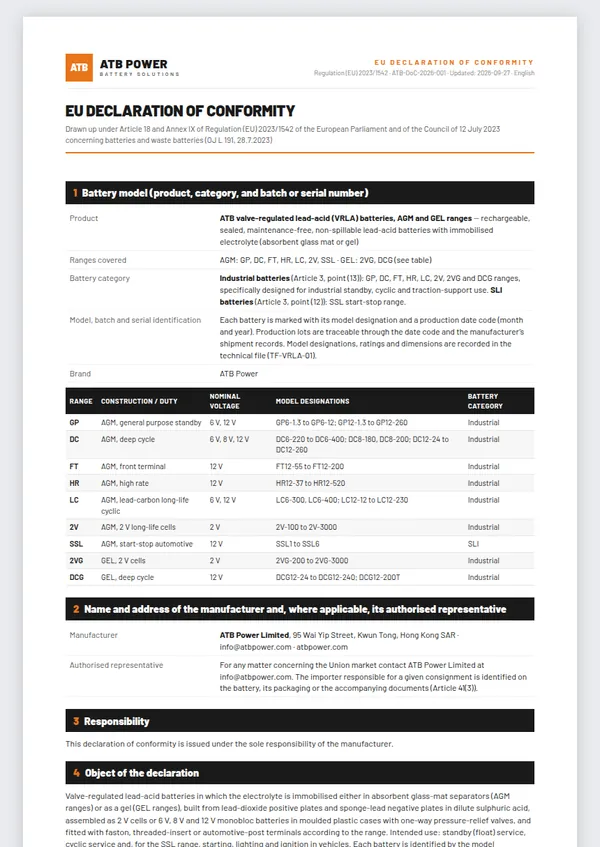
Annex IX declaration No. ATB-DoC-2026-001 covering the AGM ranges GP, DC, FT, HR, LC, 2V and SSL and the GEL ranges 2VG and DCG. Module A; IEC 60896-21/-22, EN 50342-1/-6, UN SP 238.
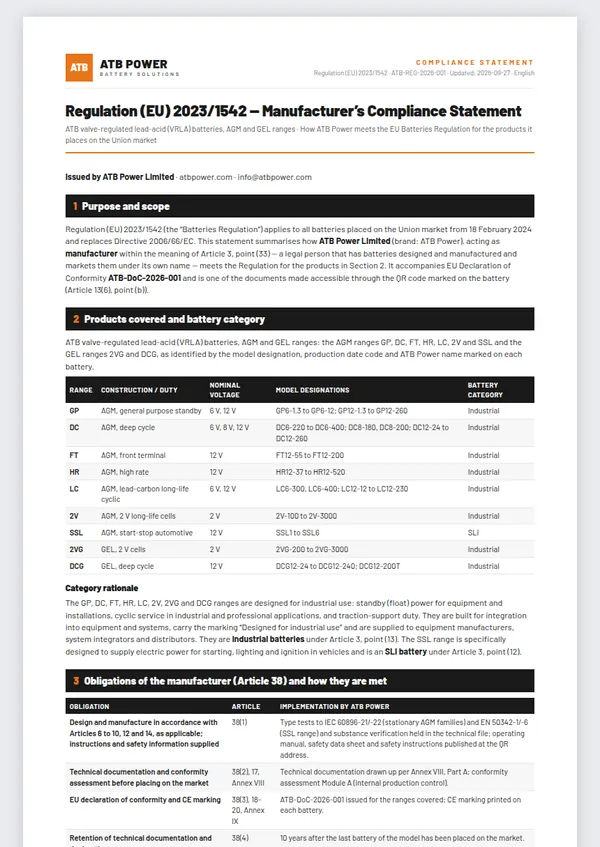
How ATB Power, as manufacturer under Article 3(33), meets the Regulation: product coverage and category, obligations of Article 38, requirement-by-requirement position, roles of importer and distributor, key dates.
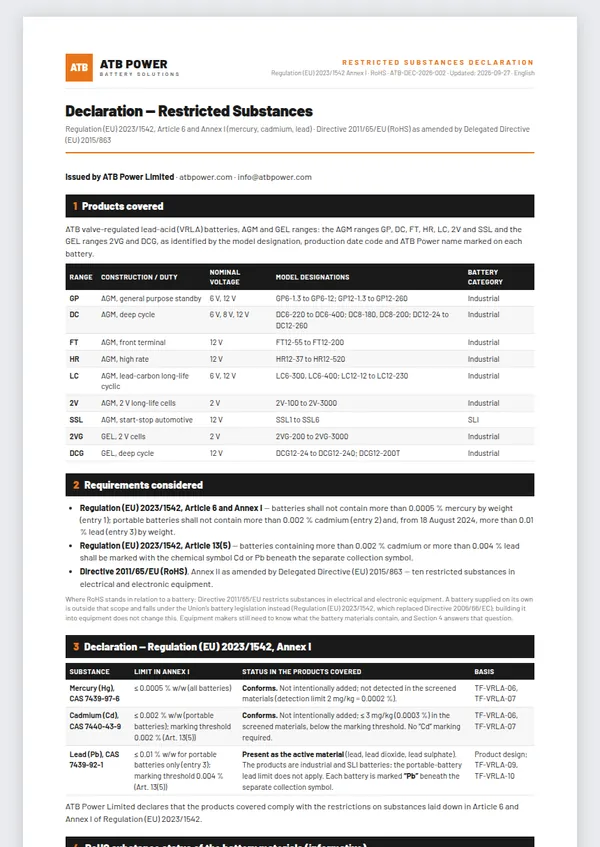
Mercury, cadmium and lead status under Article 6 and Annex I; “Pb” marking; RoHS substance screening of the case, terminal, sealing compound and separator materials.
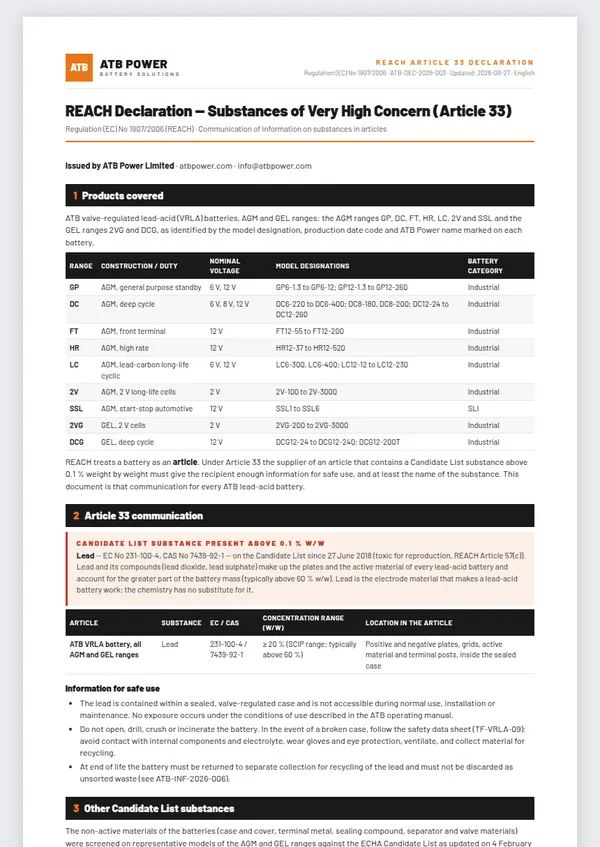
Lead is present above 0.1 % w/w as the active material; safe-use information; other Candidate List substances (253 entries, 4 Feb 2026) screened; SCIP data.
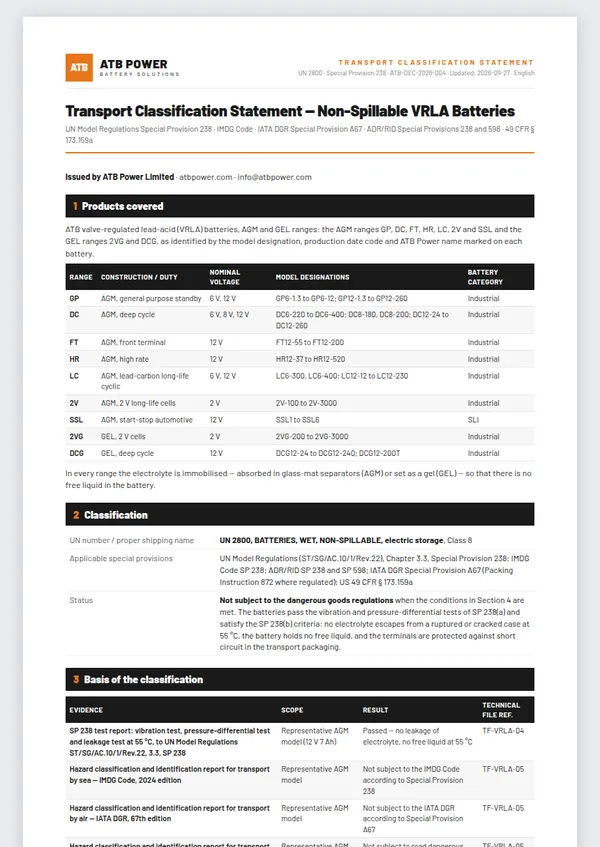
UN 2800, Special Provision 238: not subject to IMDG, IATA DGR (A67) or ADR (SP 238/598) when terminals are protected. Evidence and conditions of shipment.
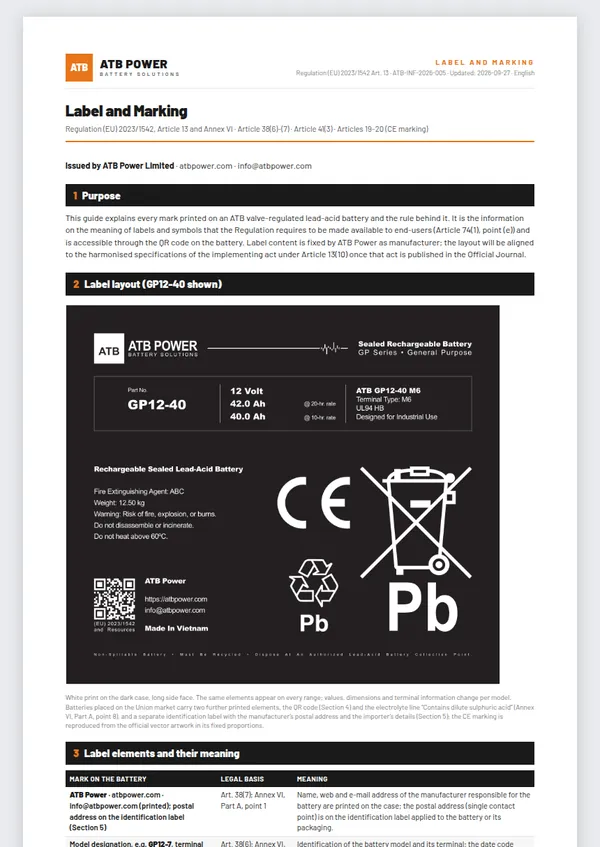
Every mark on the battery and its legal basis: manufacturer identification, model and date code, separate collection symbol, Pb, CE, QR code, importer identification, symbol sizing.
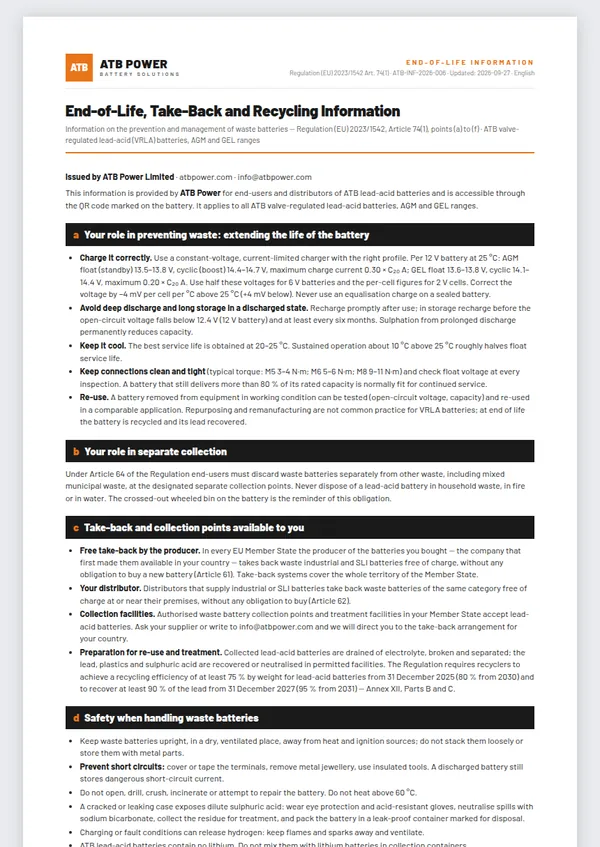
Prevention, separate collection, take-back points, safe handling of waste batteries, meaning of symbols and environmental impact — Article 74(1), points (a) to (f).
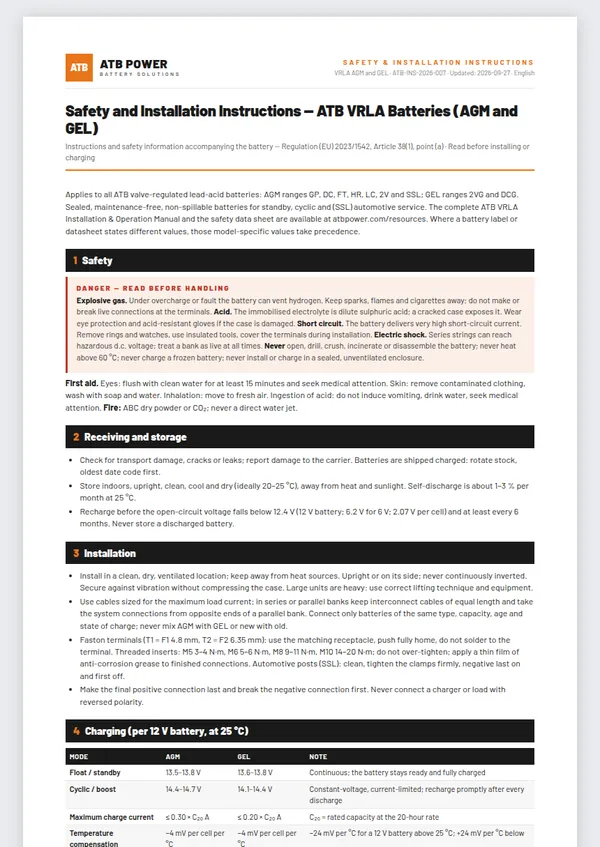
Instructions and safety information accompanying the battery: hazards, first aid, storage, installation, charging settings for AGM and GEL, maintenance, transport and end of life.
Market surveillance authorities, importers and customers: supporting technical documentation is available on reasoned request at info@atbpower.com.
Practical guides on choosing, charging and caring for AGM, Gel and lithium batteries. Read online or download.
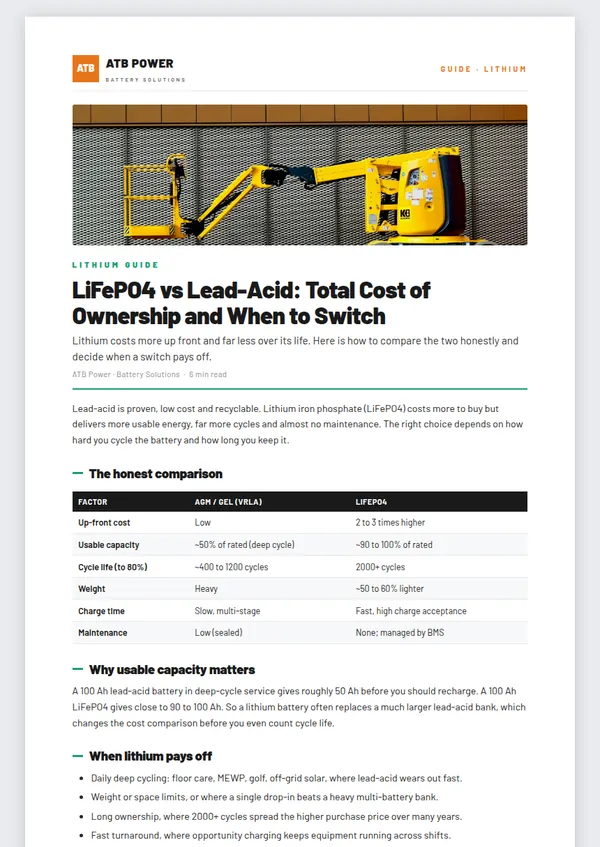
Lithium costs more up front and far less over its life. Here is how to compare the two honestly and decide when a switch pays off.
Not all lithium chemistries behave the same. LiFePO4 is the stable one, and a good BMS does most of the safety work for you.
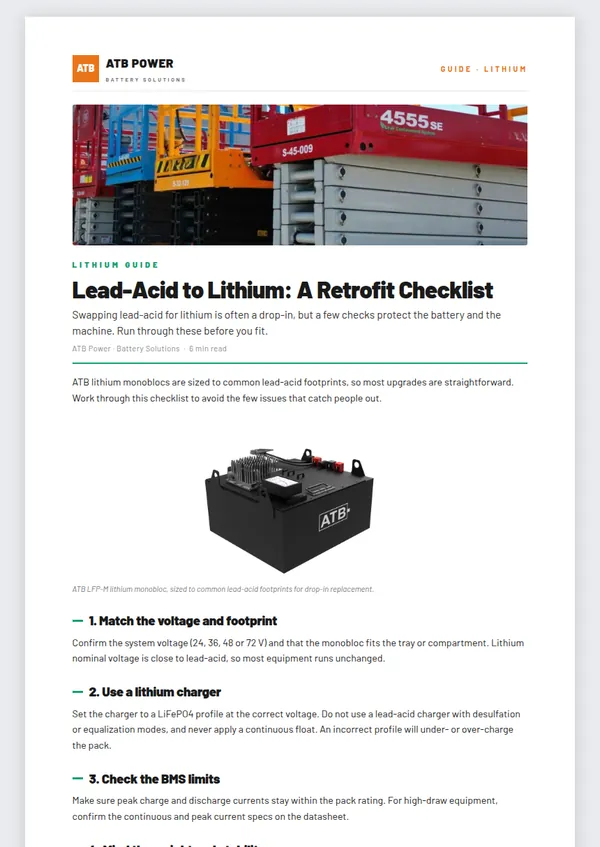
Swapping lead-acid for lithium is often a drop-in, but a few checks protect the battery and the machine. Run through these before you fit.
The battery management system is the brain of a lithium pack. Here is what it protects against and what to do when it intervenes.
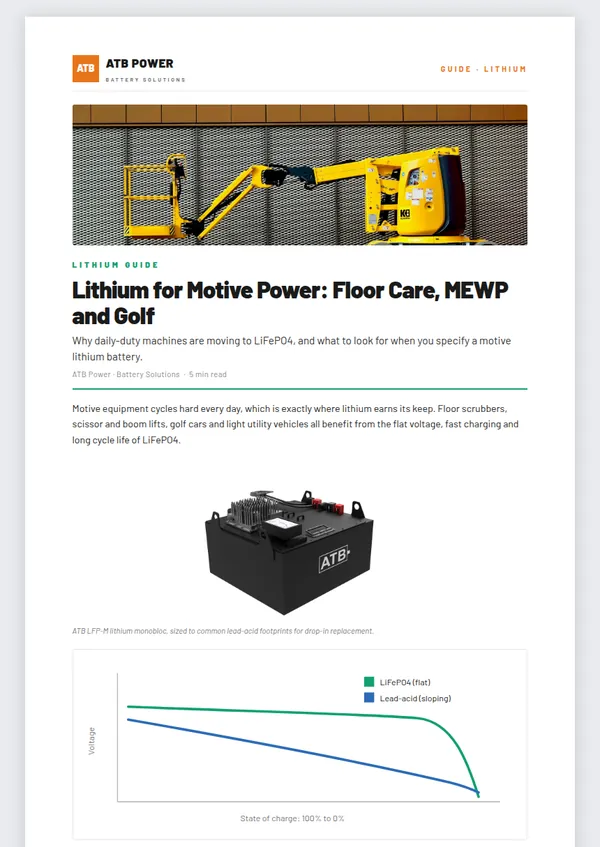
Why daily-duty machines are moving to LiFePO4, and what to look for when you specify a motive lithium battery.
Both are sealed, maintenance-free lead-acid. The difference is how the electrolyte is held, and that decides which duty each one suits.
Most lead-acid batteries die from poor charging, not age. Get the voltages, temperature and timing right and you will get the full life.
How deep you drain a battery decides how many cycles you get. A small change in depth of discharge can double its working life.
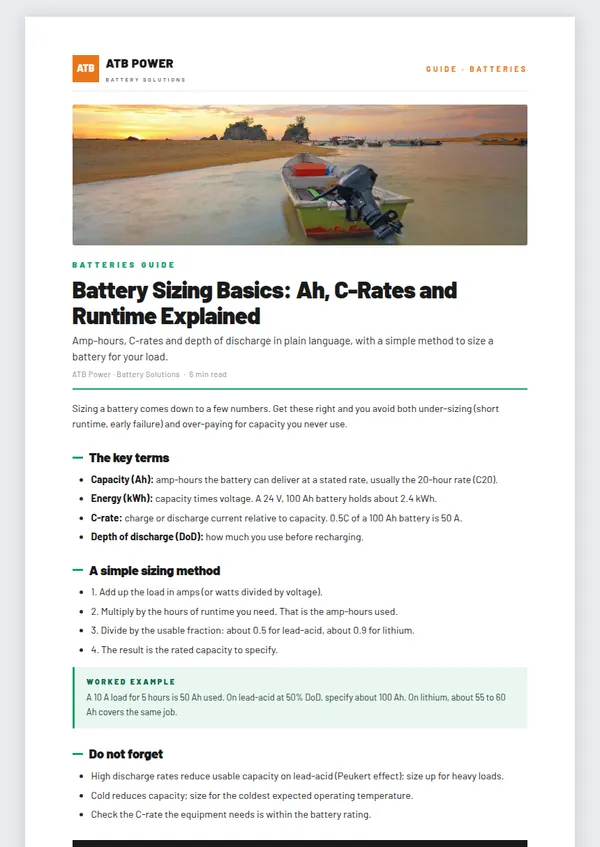
Amp-hours, C-rates and depth of discharge in plain language, with a simple method to size a battery for your load.
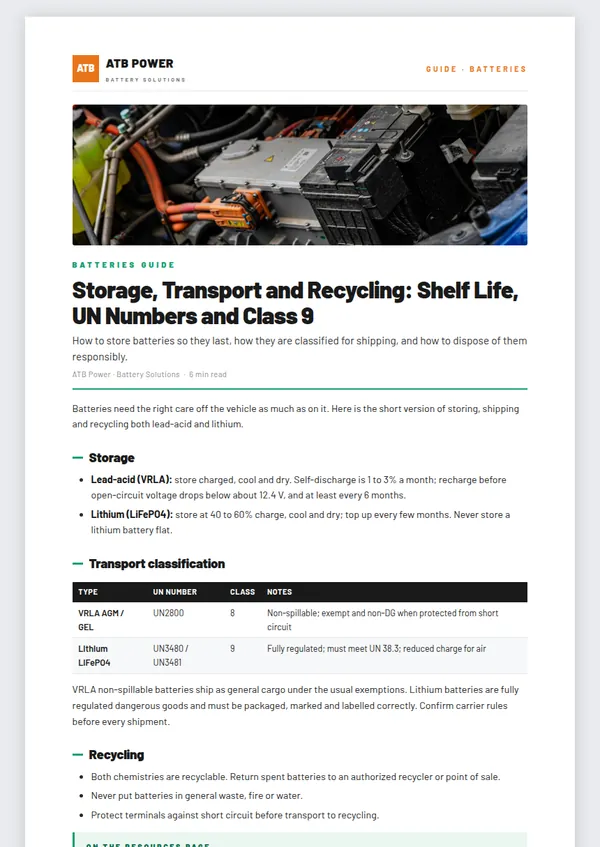
How to store batteries so they last, how they are classified for shipping, and how to dispose of them responsibly.
Range overviews and specification tables by battery series.
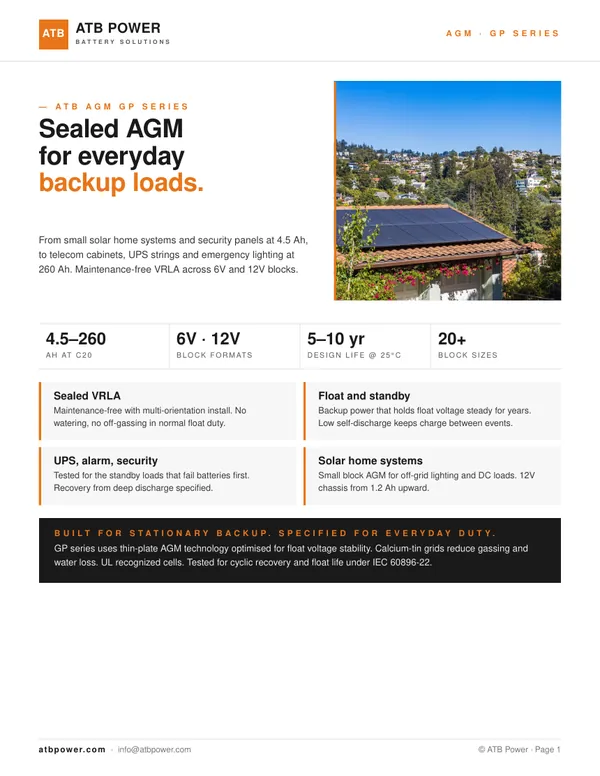
Sealed AGM for UPS, security, alarm and emergency backup. 4.5 to 260 Ah across 6V and 12V.
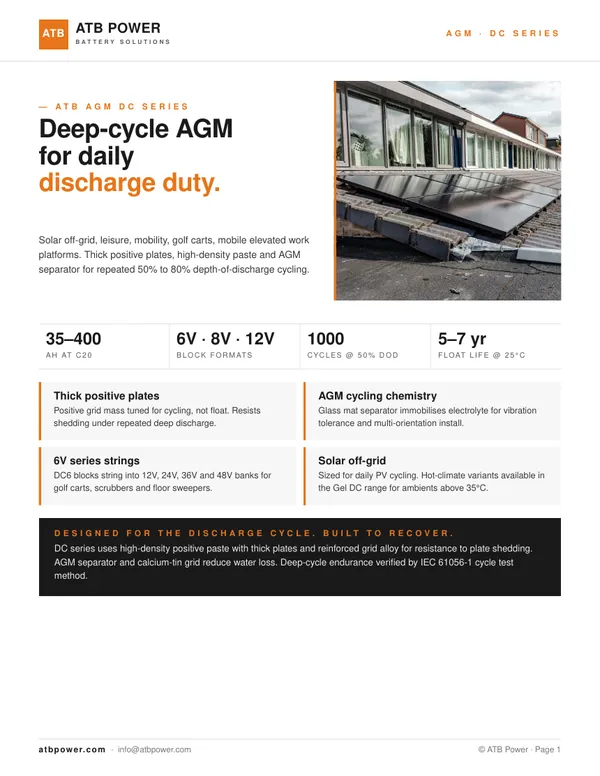
Deep-cycle AGM for solar, mobility and cyclic duty.
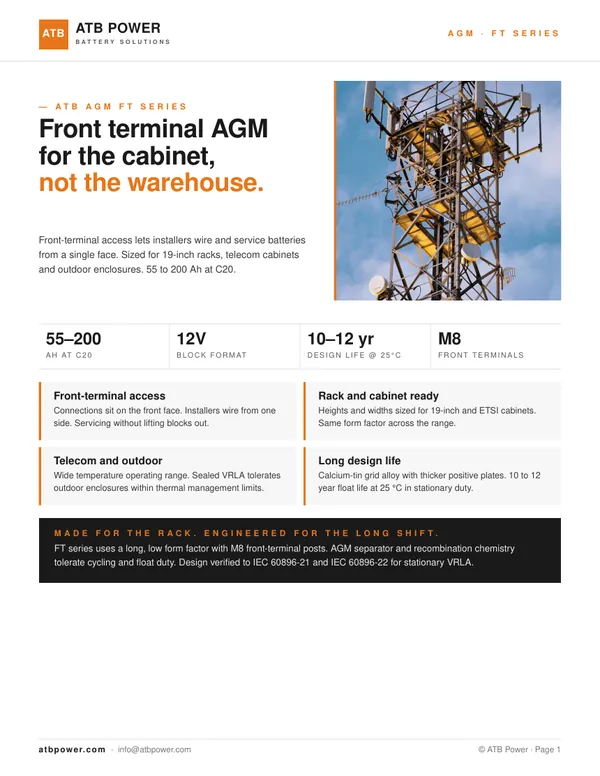
Front-terminal long-life VRLA for telecom and rack-mount standby.
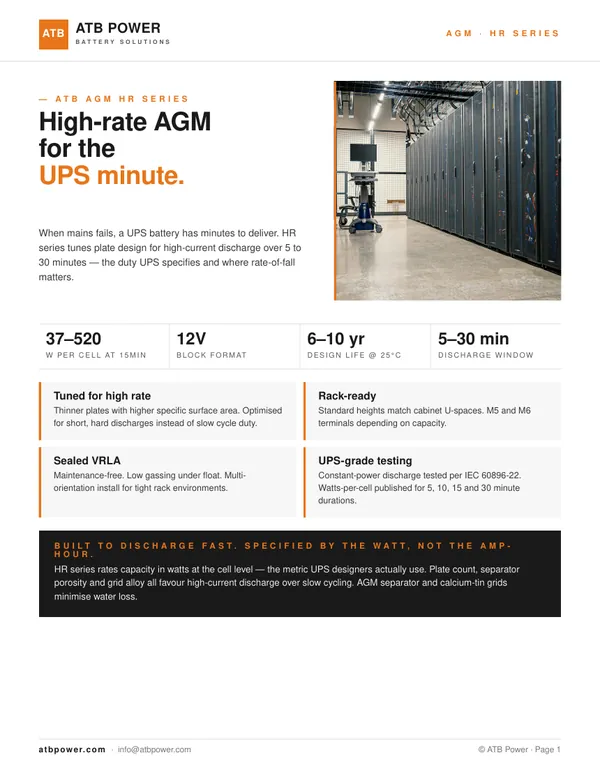
High-rate AGM for UPS and high-discharge backup.
Long-life cyclic AGM for demanding deep-cycle service.
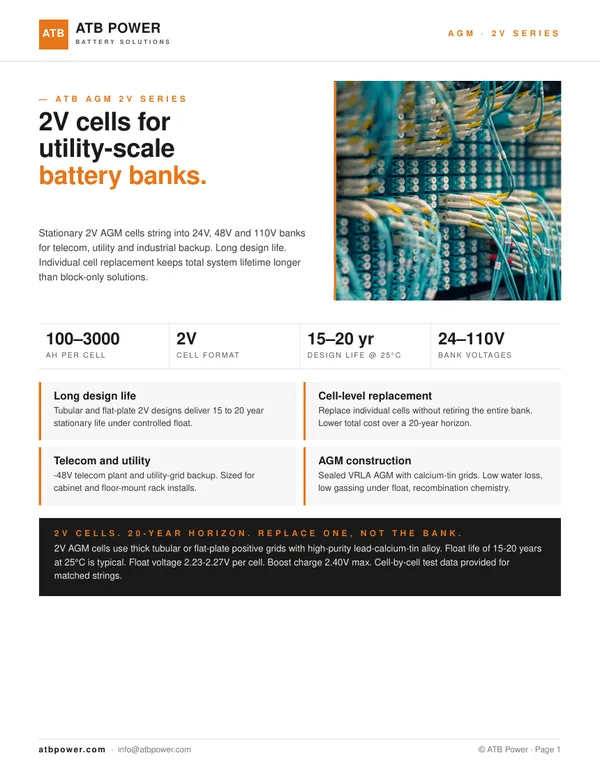
2V long-life cells for telecom, utility and solar DC-bus standby.
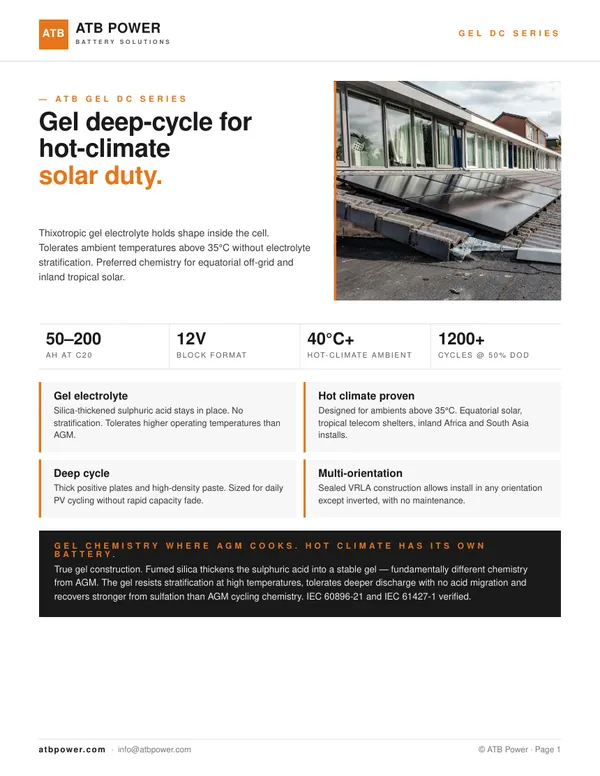
True-gel deep-cycle batteries for solar, marine and high-temperature service.
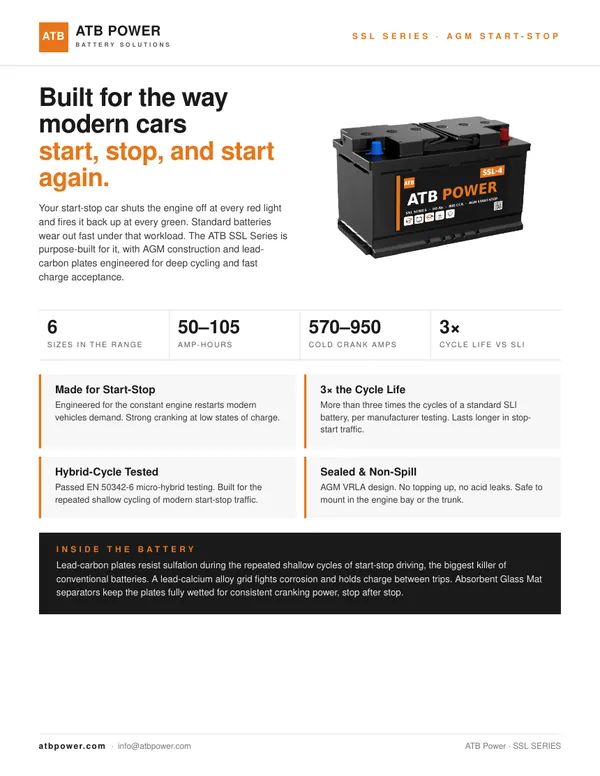
Start-stop AGM with lead-carbon plates, European LN1 to LN6 fitment.
Application-led overviews mapping ATB products to common duty profiles.
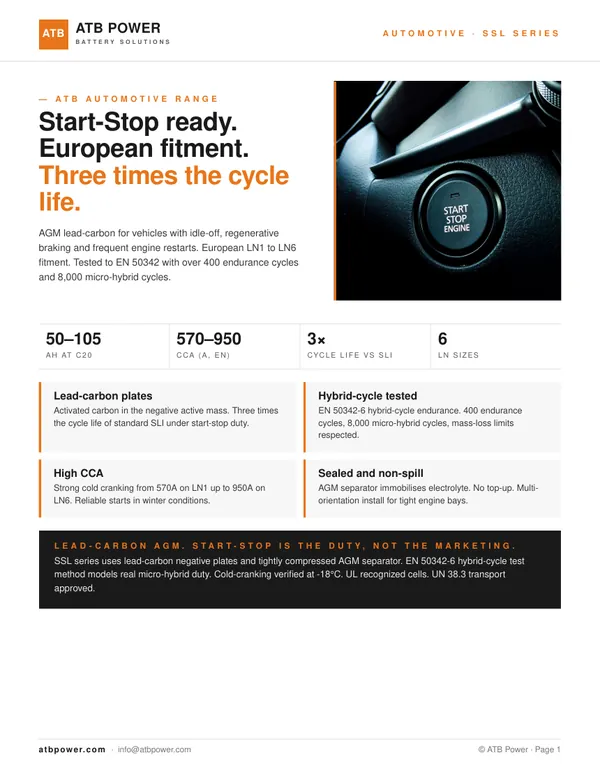
Start-stop and conventional automotive battery range.
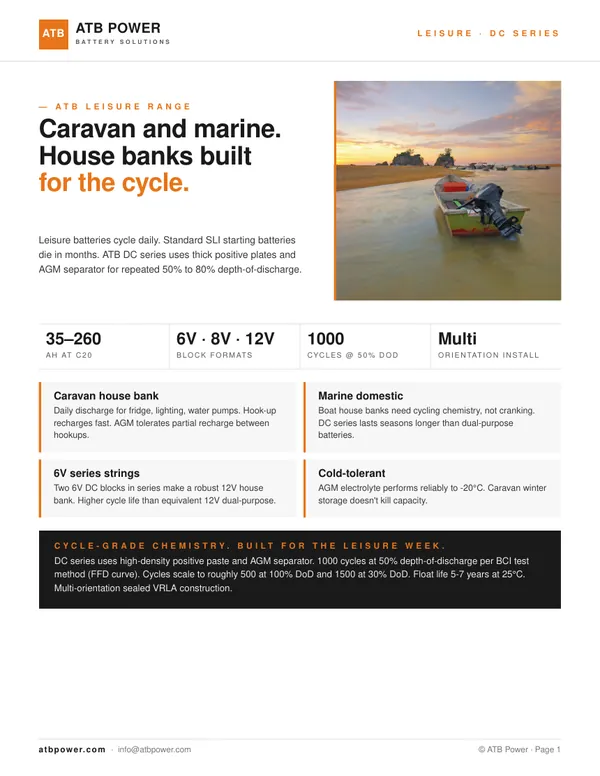
Leisure and recreational deep-cycle battery range.
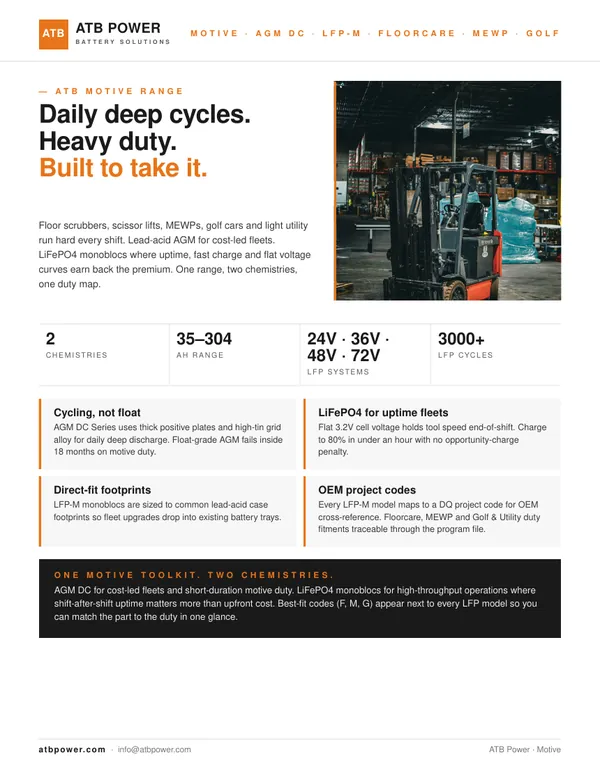
Motive power for floor care, material handling and industrial vehicles.
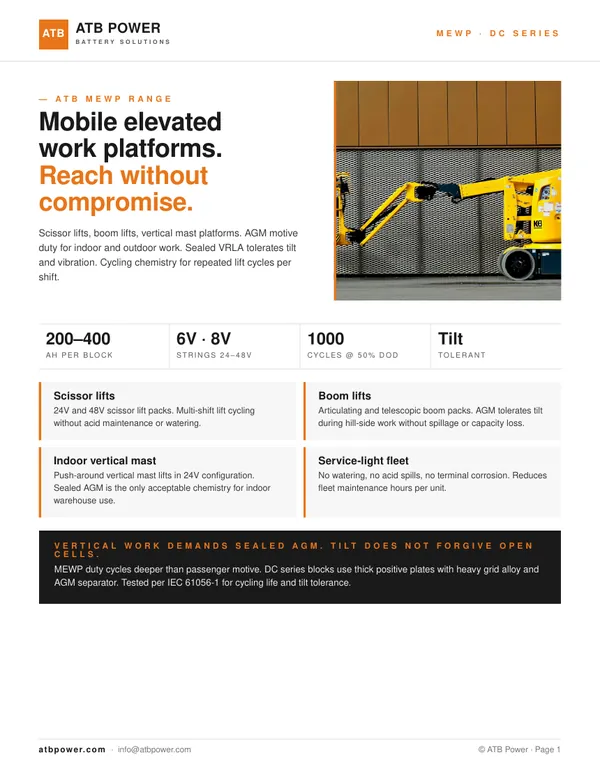
Batteries for mobile elevating work platforms and aerial lifts.
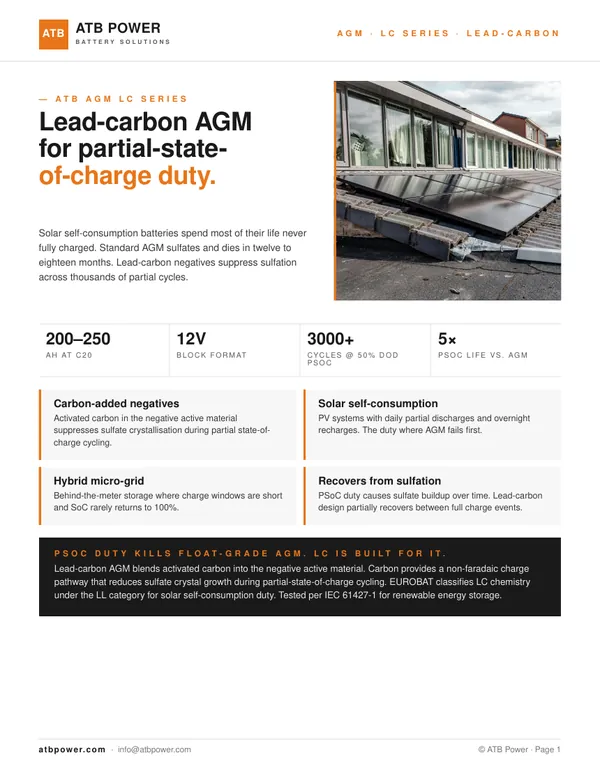
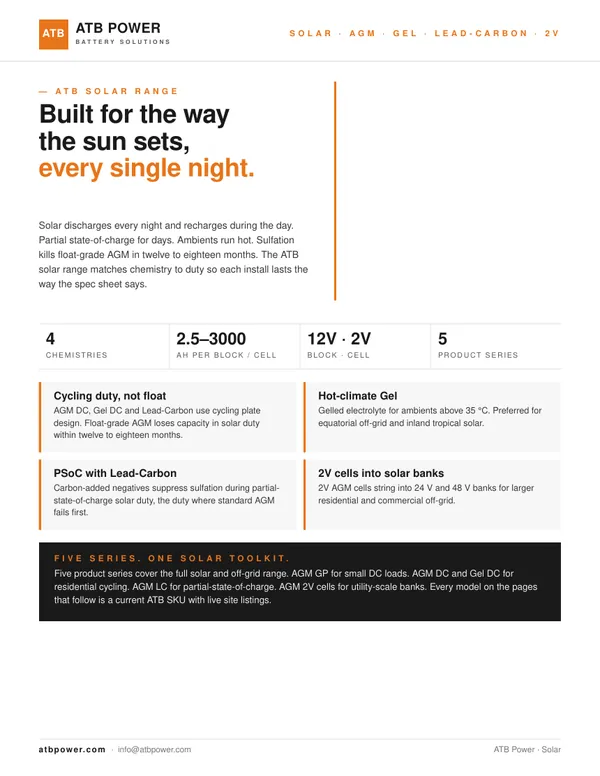
Solar and off-grid storage battery range.
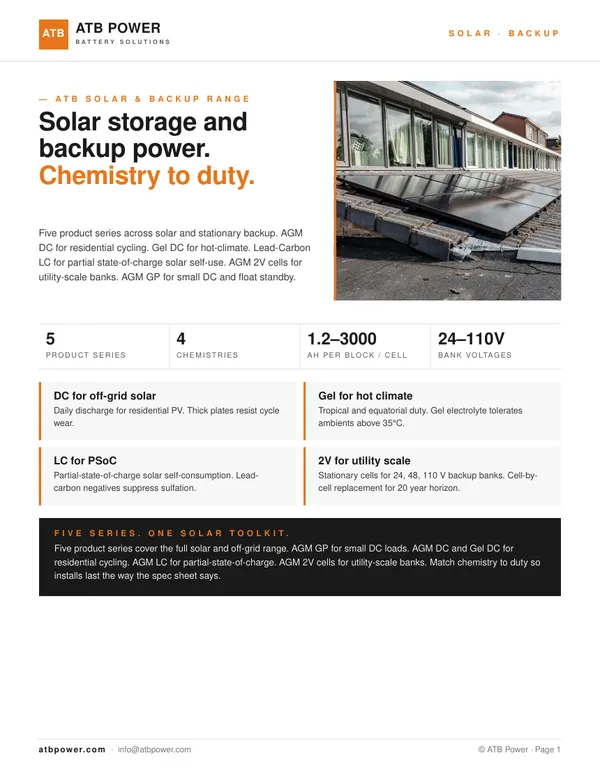
Residential and commercial solar backup storage.